Dizzying, masterfully executed geometric puzzle Pinwheel/Windmill Vintage Quilt
Dizzying, masterfully executed geometric puzzle Pinwheel/Windmill Vintage Quilt
Couldn't load pickup availability
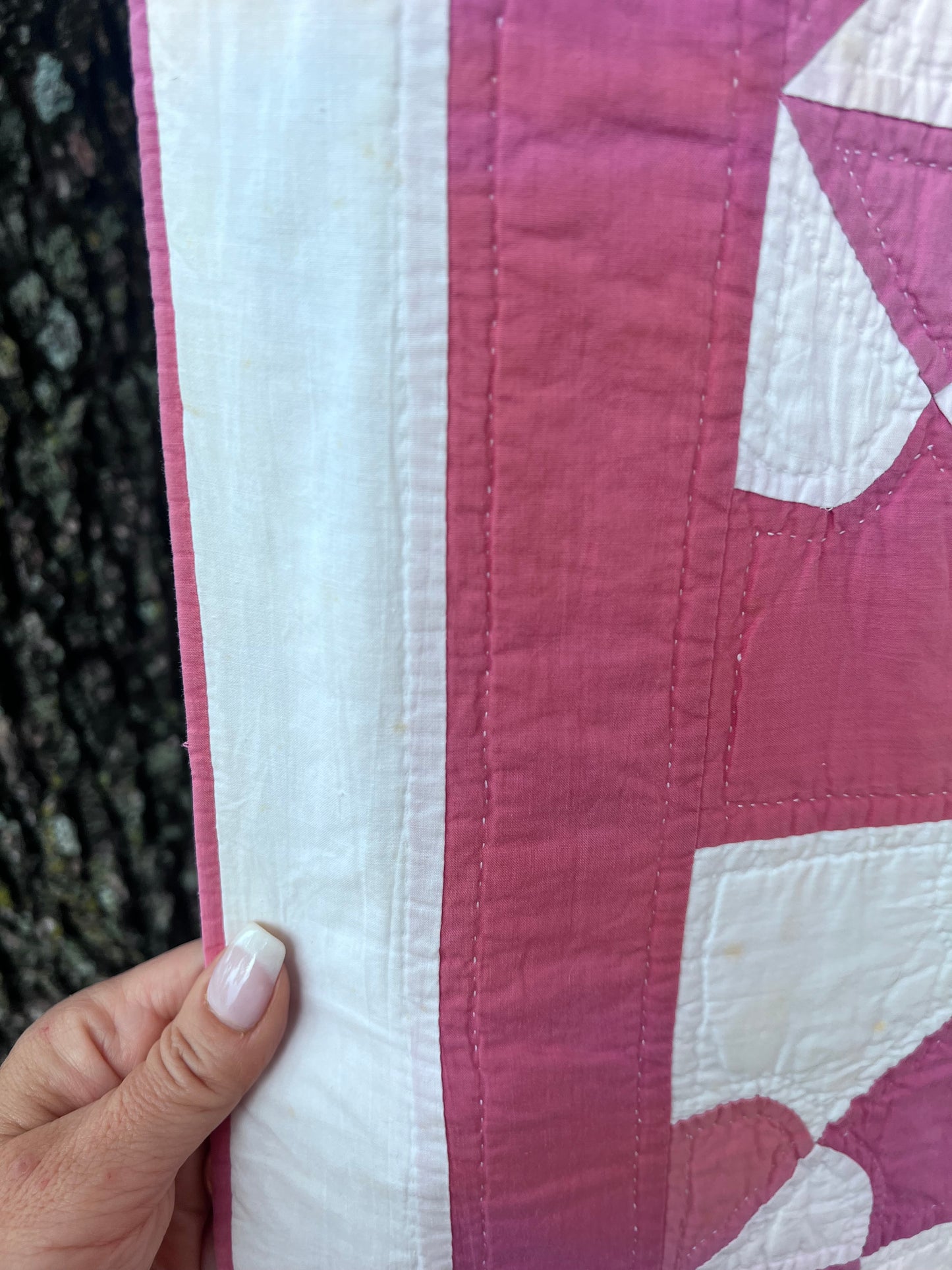
This quilt is a dizzying, masterfully executed geometric puzzle! It is an exceptional specimen of a classic two-color quilt, a style that reigned supreme in the late 19th and early 20th centuries. Measures 81x90, very thin and soft. Slight tanning.
Because two-color quilts offer zero multi-colored scrap distractions, they rely entirely on technical precision and graphic movement to make an impact. This maker absolutely nailed it. Here is a breakdown of the pattern, history, and incredible texture of this piece:
1. The Pattern: A Interlocking Optical Illusion
The pattern is a highly dynamic variation of a traditional Pinwheel or Windmill block, often published in historical pattern registries under names like the Double Windmill, Indian Fan, or variations of a Clamshell/Petal Pinwheel.
-
The Construction: If you look closely each block is a square divided diagonally. It combines sharp, straight-line piecing for the outer triangles with tight, curved piecing for the rounded "petals" or "blades."
-
The Tessellation: What makes this layout brilliant is how the blocks interact. The maker alternated the orientation of the blocks so that when they are sewn together, the white blades and the orchid-pink blades meet perfectly to form secondary interlocking circles. The design never lets your eye rest; it continuously shifts between looking like a field of turning windmills and a grid of graphic, geometric flowers.
2. Fabric History:
The specific shade of deep orchid-pink cotton used here provides a great historical clue:
-
Late 19th to Early 20th Century: This specific solid colorway became highly popular between the 1890s and 1910s. It sits right in the family of synthetic, colorfast dyes that emerged after the famous "Turkey Red" craze.
-
Immaculate Contrast: Solid fabrics from this era were prized because they didn't bleed into the white ground when washed. Over a century later, the white cotton remains exceptionally crisp, and the plum tone hasn't faded, preserving the stark, high-contrast optical illusion perfectly.
3. The Needlework: Following the Curves
When a quilt top is this busy, a maker has to be very intentional with their hand-quilting, shows exactly how thoughtfully this was executed:
-
Echoing the Architecture: Instead of stitching a generic utility grid across the entire surface, the quilter chose to contour-quilt. On the white backing fabric, you can see how the stitching lines trace the exact curved, swirling silhouettes of the pinwheel blades on the front.
-
The Relief Texture: Because the hand-quilting outlines the curved shapes so closely, the unquilted centers of the petals puff up under tension. The back of the quilt looks like an entirely separate piece of quilted structural relief art, covered in embossed floral wheels.
The framing is finished beautifully with a thick, solid orchid border and a clean white outer binding. The sheer amount of curved piecing required to make a quilt this size without puckering or stretching the fabric is a testament to an incredibly skilled historical dressmaker or quilter. It's a gorgeous, graphic showstopper!
Share